Motorcycle Boots for Commuting: What Protects and What Does Not
 kristina estep
4 min read
May 29, 2026
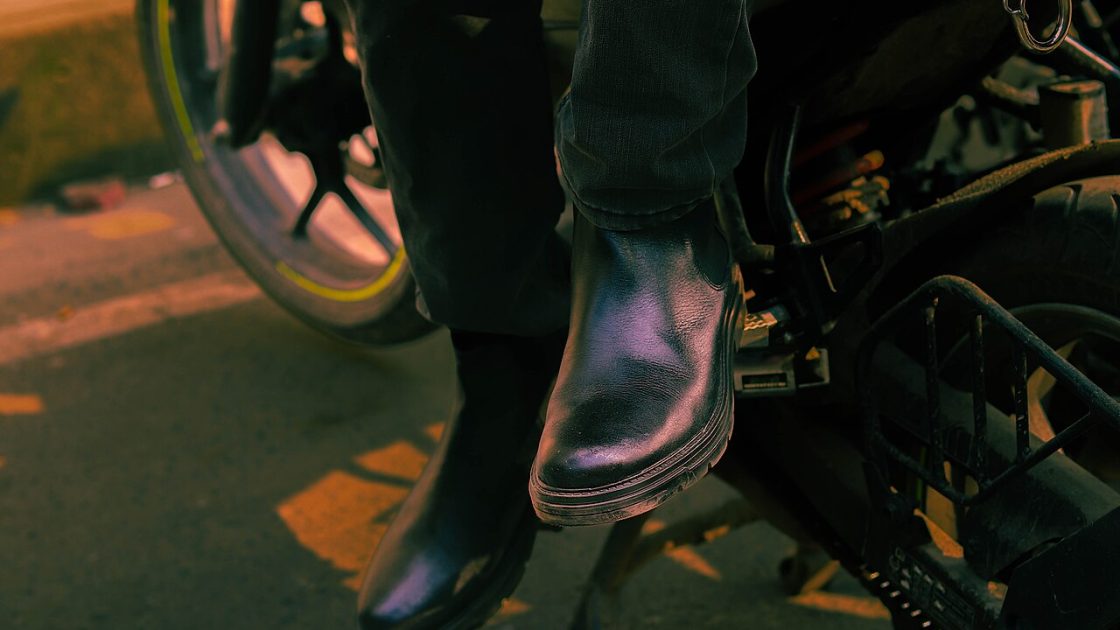
Commuting boots are chosen for how they look at a desk, and the protection is assumed. Most of the injuries that happen in city traffic involve the ankle and the foot, and the features that prevent them are not visible from outside.
Ankle support
The ankle is a hinge with limited side-to-side tolerance. A boot with a rigid heel cup and a moulded ankle disc resists the twisting that happens when a bike goes down and a foot is trapped.
A soft leather boot with a zip offers abrasion resistance and almost nothing against torsion. If the boot can be folded in half at the ankle by hand, it will fold the same way in a crash.
Press the sides of the boot inward. A boot that caves easily has no structure where it matters.
Sole stiffness
A stiff sole spreads the load from the peg and protects the arch in a crush. A soft sole is comfortable to walk in and transmits impact straight through.
Look for a sole that resists bending at the arch but flexes at the toe. That combination protects the foot and still lets you walk from a car park to an office.
Oil-resistant rubber matters in traffic, where fuel spills at junctions are common and a slippery sole on a wet road is a genuine hazard.
Toe and shifter protection
Reinforced toe caps and a shifter pad are the two wear points on a commuting boot. Without them the toe wears through in a season and the boot leaks.
The gear lever presses a small area of the boot thousands of times. A pad that is stitched on rather than glued will survive that treatment.
Check that the toe box is not so tall that it fouls the lever. A boot that cannot slide under the lever makes every gear change deliberate, which is tiring in traffic.
Waterproofing and breathability
A commuting boot meets rain more often than a touring boot does, because it is used daily. A membrane is worth having, and the seams need to be sealed for it to work.
Leather with a waterproof treatment is breathable and needs re-proofing. A membrane keeps water out until it is punctured, and then it does nothing.
Wet boots dry slowly, so a spare pair or a boot dryer makes a real difference to how long they last.
Fit and the walk test
Try boots on with the socks you ride in, at the end of the day when feet are larger. A boot that fits in the morning will be tight by evening.
Walk up and down stairs in the shop. If the heel lifts, the boot will rub on the peg and on the walk from the bike.
Check the width across the ball of the foot. Motorcycle boots are often narrow, and a tight fit restricts circulation on a cold ride.
A boot that is comfortable in the shop and painful after twenty minutes usually has too little room across the instep. That is a fit problem no amount of breaking in will solve.
What the price buys
Above a certain point the money goes into armour, membrane quality and replaceable soles. Below it, the differences are mostly cosmetic.
Replaceable soles and buckles are worth paying for because they are the parts that wear. A boot with a good shell and a worn sole is repairable; a boot with a sealed sole is not.
Inspect the stitching at the flex point across the toe after a season. That is where cheap boots fail first.
Structure at the ankle, stiffness at the arch and a sole that grips. Those three decide whether a commuting boot protects the foot, and none of them depend on the logo.
kristina estep
Logs parts and riding gear against distance and weather. Writes from the workshop, not the press launch.