Battery Tenders: Why a Trickle Charger Beats a Jump Pack
 kristina estep
4 min read
July 2, 2026
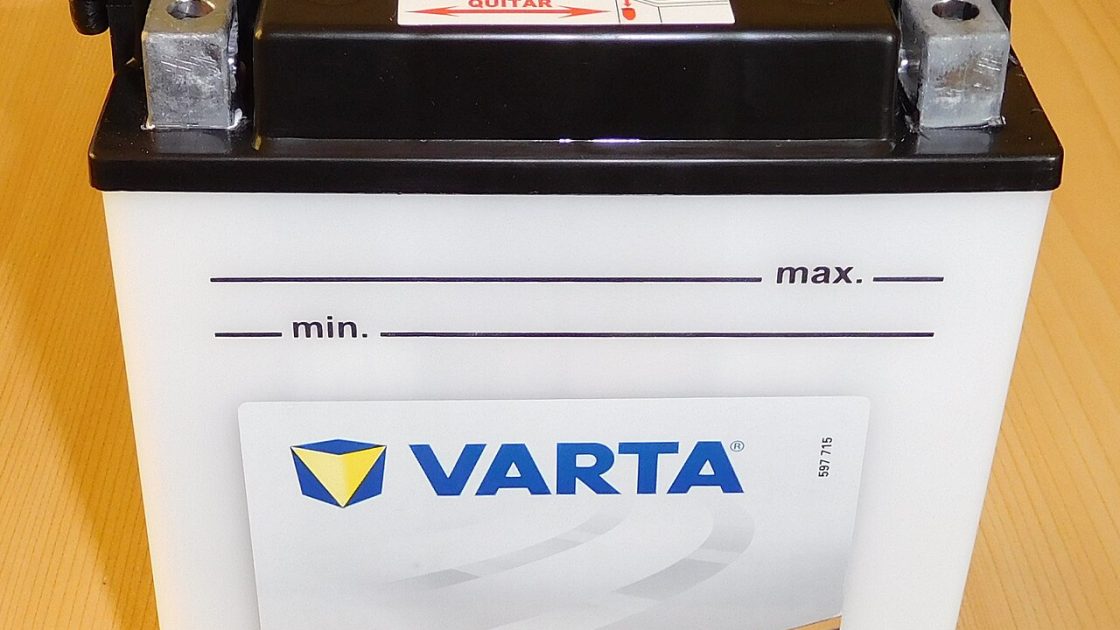
A flat battery is solved with a jump pack and then happens again a month later. The jump pack treats the symptom; the tender prevents the cause, and the cause is a battery that sits partly discharged for weeks.
What sulfation does
A lead-acid battery left below full charge develops sulfate crystals on the plates. The crystals harden over time and reduce the surface available for the chemical reaction.
Once hardened, the capacity is permanently reduced. The battery still starts the bike on a warm day and fails on the first cold morning, which is why the failure always seems sudden.
A tender keeps the battery at full charge, so the crystals never form. That is the entire mechanism, and it explains why the cheap device outperforms the expensive rescue tool.
What a tender actually does
A tender charges at a low current, then holds the battery at a float voltage and recharges when the voltage drops. It can be left connected for months.
A charger pushes a high current and is meant to be disconnected. Leaving a charger connected cooks the electrolyte and shortens life.
Smart chargers combine both functions and switch automatically. They cost more than a basic tender and are the better choice if the battery is often deeply discharged.
Connecting it properly
Fit a permanent lead with a connector so the tender plugs in without removing panels. A lead that takes two minutes to connect is a lead that gets used.
Route the connector away from heat and from the steering movement. A lead that rubs on a fork leg wears through and shorts.
Check the connection is fused. A permanent live lead without a fuse is a fire risk if it ever chafes through.
How often to use it
Any bike that is not ridden weekly benefits from a tender. That includes a bike used only at weekends in winter, because a week of cold nights takes a measurable amount out of a battery.
Connect it whenever the bike is parked for more than a few days, and leave it connected through winter storage.
A bike ridden daily does not need one, provided the charging system is healthy and the rides are long enough to replace what the starter used.
When a jump pack makes sense
A jump pack is worth carrying on a tour or keeping for a bike with an intermittent fault. It gets you home, which a tender cannot.
It is not a substitute for diagnosis. A battery that goes flat repeatedly is telling you about a parasitic drain, a failing regulator or an old battery.
Check the charging voltage at the battery with the engine running. A reading below about thirteen and a half volts at idle points at the charging system rather than the battery.
Battery age and replacement
Lead-acid batteries last three to five years with good treatment and two with neglect. A tender extends the upper end rather than making an old battery new.
Test the battery under load before replacing it. A battery that holds twelve and a half volts at rest and drops below ten during cranking is finished regardless of what a tender does.
Replace with the same chemistry and the same physical size. Lithium batteries need a compatible charger, and a tender designed for lead-acid can damage them.
Storage and temperature
Cold slows the chemical reaction and reduces capacity, but it also slows self-discharge. A cold battery holds charge longer and delivers less when asked.
Heat is what kills batteries permanently. A bike stored next to a boiler or in direct summer sun ages far faster than one in a cool garage.
Store the bike with the battery connected to a tender in a cool place, and it will still be healthy in spring.
The pack gets you started and the tender keeps you starting. One treats the morning the battery fails and the other makes sure that morning does not arrive.
kristina estep
Logs parts and riding gear against distance and weather. Writes from the workshop, not the press launch.