Rear Shock Rebuild or Replace: The Cost Line
 kristina estep
4 min read
June 10, 2026
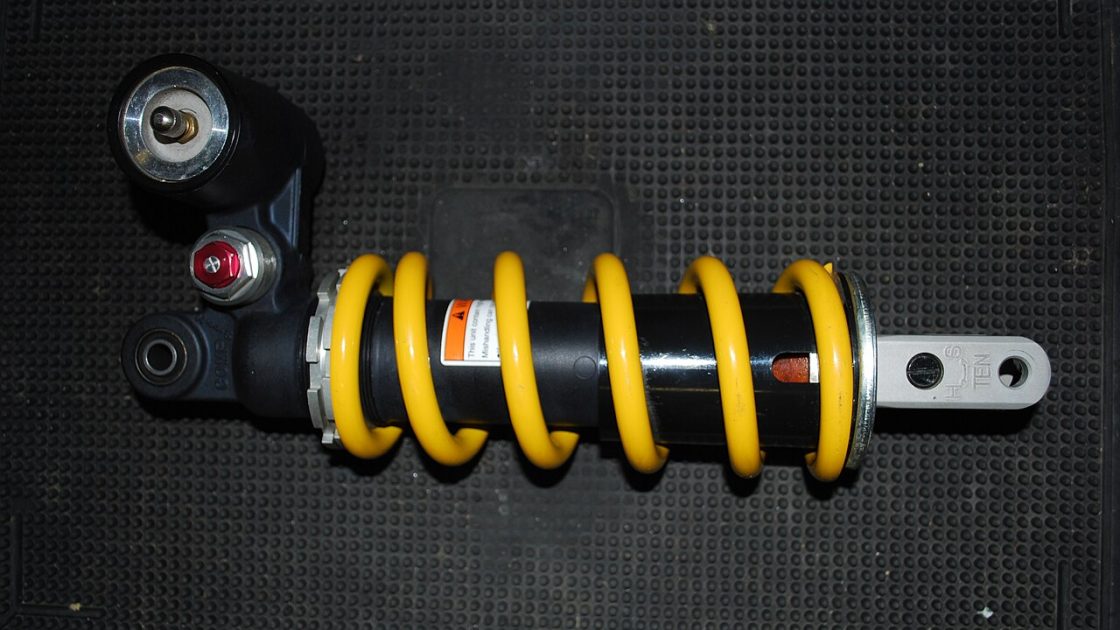
A leaking rear shock is treated as a terminal diagnosis by many owners, who replace a rebuildable unit with a cheap non-adjustable one. That trade usually makes the bike worse and costs more over three years.
What a rebuild involves
A rebuild replaces the oil, the seals, the piston band and the nitrogen charge. On a serviceable shock, the damper body and shaft are reused because they are the expensive parts and they rarely wear out.
The result is a shock that performs like new, with the same spring and the same adjustment range it left the factory with.
Rebuild intervals are usually expressed in miles or seasons, and most manufacturers are optimistic. A shock that has done thirty thousand miles without a service has oil that has broken down and a nitrogen charge that has leaked away.
When rebuilding makes sense
If the shock has external adjustment and a known brand, it is almost certainly worth rebuilding. Quality dampers are built to be serviced, and the cost is typically a third of a replacement of similar quality.
A rebuild also preserves the spring, which is matched to the bike. A cheap replacement often arrives with a generic spring that suits nobody in particular.
A shock with a remote reservoir and separate compression adjustment is almost always worth saving. Those features cost real money when new and they cannot be added later.
Check whether parts are still available before committing. A rebuildable shock from a maker that has stopped supplying seal kits is not rebuildable in practice.
When replacement wins
A sealed, non-adjustable shock on a budget commuter has nothing to rebuild. When it leaks, the cost of drilling, recharging and resealing exceeds the value of the part.
Corrosion is the other deciding factor. A damper body with pitted chrome on the shaft will destroy new seals within a few thousand miles, and no rebuild fixes that.
A shock with a rusty spring is still rebuildable if the damper body is sound. Springs can be blasted and coated, and the cost is small next to a new unit.
The cheap replacement trap
A very cheap aftermarket shock usually has less damping control than the worn original. Owners describe the result as bouncy, and it is worse in the wet, where a rear that will not settle is genuinely unpleasant.
If the budget does not stretch to a quality unit, a rebuild of the original is the better use of the money in almost every case.
Ask what oil and what nitrogen pressure the workshop will use. A rebuild with the wrong charge behaves unpredictably at the end of the stroke, and the fault is easy to blame on the spring.
Springs, separate from damping
The spring carries the load and the damper controls the movement. A rebuild does not change the spring rate, so a shock that sags with a passenger still sags after a rebuild.
If sag is outside the range, budget for a spring at the same time. Doing both in one visit costs less than two rounds of labour.
Budget for labour either way. Fitting a replacement shock takes the same time as removing one for a rebuild, so the difference is all in the parts.
Costing it honestly
Add the rebuild, the spring if needed, new mounting bearings and the labour. Compare that total against a quality replacement, not against the cheapest one on a marketplace listing.
Then divide by the miles you expect to keep the bike. The expensive-sounding option is frequently the cheaper one per year.
Openable, smooth-shafted and still supported means rebuild. Sealed, pitted or orphaned means replace, and replace with something at least as good as what came off.
A leak is a service interval, not a death sentence. The decision turns on whether the damper can be opened, whether the shaft is still smooth, and whether the replacement you can afford is actually better than what you have.
kristina estep
Logs parts and riding gear against distance and weather. Writes from the workshop, not the press launch.