Motorcycle Brake Pad Compounds Explained for Street Riding
 kristina estep
4 min read
October 5, 2026
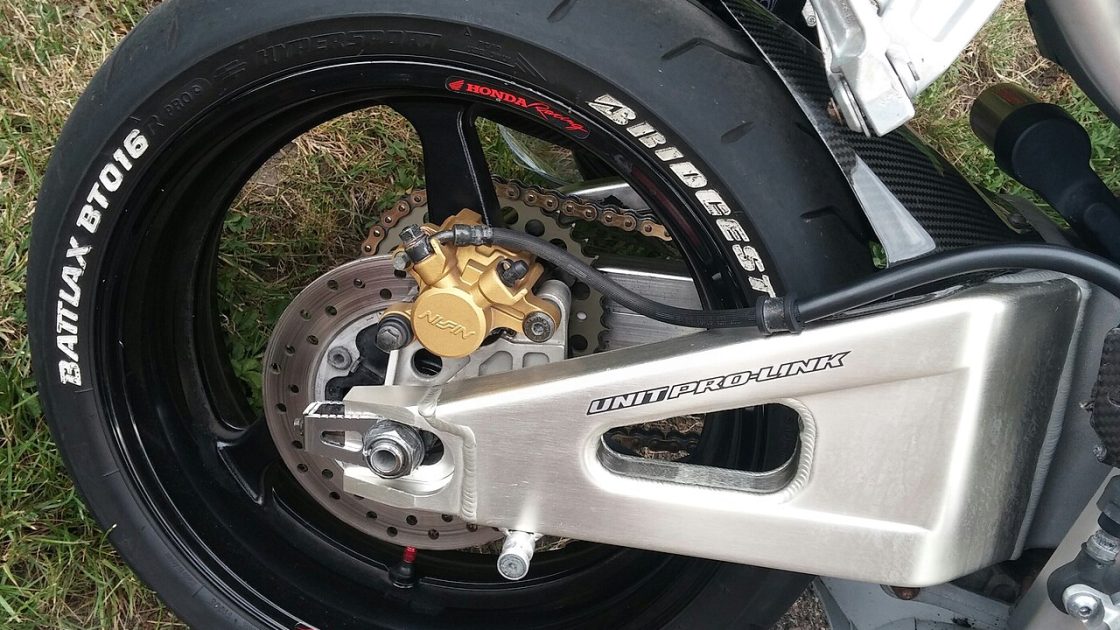
Riders ask for the strongest pads available, as though braking were limited by the pad. On a street bike the limit is almost always the tyre, the rider’s reaction time or the road surface, and a race compound can make all three worse.
Organic pads
Organic compounds use non-metallic fibres in a resin binder. They are quiet, gentle on discs and they work well from cold, which makes them a sensible default for a commuter.
They fade earlier under repeated hard use and they wear faster than sintered pads. For stop-start city riding, neither matters much because the brakes never get hot enough to fade.
Organic pads also produce less dust that sticks to the wheel, which matters more than it sounds on a bike with light-coloured rims. The trade is faster wear and a shorter service interval.
Sintered pads
Sintered pads are metal powder pressed and baked into a solid. They bite harder when hot, resist fade and last longer, which is why they are standard on most larger bikes.
They are harder on discs and they can be noisy when cold. On a light bike ridden gently, they may never reach the temperature where their advantage appears.
Sintered pads need a few hard stops to reach their working temperature, which is why they can feel wooden on a short winter commute. Once hot, the difference in bite is obvious.
On a heavy bike with a single front disc, sintered is close to mandatory. The extra friction is the only thing standing between a loaded machine and a long stopping distance.
Semi-sintered and hybrid
Mixed compounds try to combine cold bite with heat resistance. Most original equipment pads on mid-capacity street bikes fall into this category, and they are a good compromise for mixed use.
The label tells you less than the specification. Look for a friction rating and a stated operating temperature rather than a marketing phrase on the box.
A wet climate pushes the choice towards organic or semi-sintered, because cold bite matters more than fade resistance when the disc is wet and the tyre is cold. Sintered pads on a wet morning take longer to wake up.
What compound suits which rider
A daily commuter in a wet climate wants predictable cold performance and low disc wear. Organic or semi-sintered wins there.
A rider who does regular mountain passes with a loaded bike wants fade resistance. Sintered wins, and the extra disc wear is the price of not losing the lever halfway down.
Bedding in on a wet road is unreliable, because the transfer layer forms unevenly. Find a dry stretch and do the bedding-in stops there, then avoid heavy use for the first fifty miles.
Bedding in new pads
New pads need a transfer layer on the disc before they work properly. Make a series of moderate stops from moderate speed, letting the brakes cool between them, and avoid heavy braking for the first fifty miles.
Do not fit new pads to a scored disc and expect a smooth result. Either machine the disc or replace it, because the pads will conform to the grooves and never make full contact.
Push each piston back before fitting new pads and check that they move freely. A sticky piston wears one pad faster and can drag, which cooks the fluid and the disc together.
The rest of the system
Pad compound is one variable among several. Old fluid, a swollen rubber line and a sticky caliper piston will all cost more braking performance than a compound upgrade will gain.
Check the fluid, the line condition and piston movement before spending money on pads. Those three items are where most soft-lever complaints actually live.
Match the pad to the temperature the brakes actually see, bed it in on a dry surface, and the compound label stops being the deciding factor.
The strongest pad on the shelf is not the fastest way to stop. The right compound for your temperature range, bedded in properly on a healthy system, is.
kristina estep
Logs parts and riding gear against distance and weather. Writes from the workshop, not the press launch.