O-Ring vs X-Ring Chains: What the Difference Actually Costs You
 kristina estep
4 min read
July 29, 2026
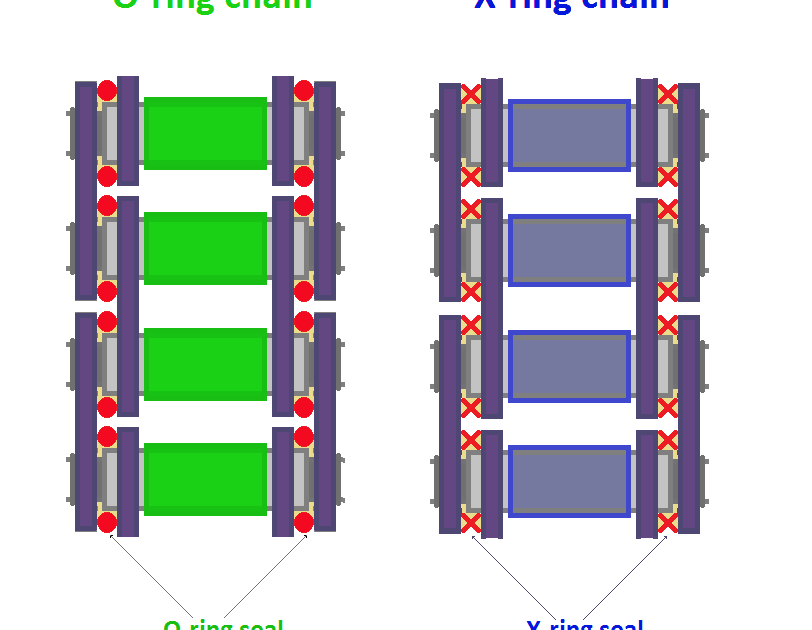
Sales copy makes the X-ring sound like a generational leap over the O-ring. In practice the two chains do the same job with a slightly different seal cross-section, and the price gap between them is usually larger than the performance gap.
What the seal shape changes
An O-ring has a round cross-section that presses against the inner and outer plates. An X-ring has four lips instead of two contact points, which cuts friction a little and gives grit fewer places to sit.
The friction difference is small, measurable on a bench, and hard to feel on a road bike. Where the X-ring earns its money is in dirty conditions, because the extra lips keep abrasive paste away from the pin.
Both seal types sit between the same plates and hold the same grease. The X-ring’s advantage shows up as slower wear in grit, not as less friction on a clean road.
Seal quality varies more between manufacturers than between ring shapes. A well-made O-ring from a known chain maker beats a cheap X-ring every time.
Where the money goes
A quality O-ring chain costs less than a comparable X-ring by a margin that often covers a front sprocket. If your riding is mostly dry highway, that saving buys more life than the seal upgrade does.
If you commute through winter grit and salted roads, the X-ring usually wins on total cost. It survives the conditions that make cheap chains fail early.
Sealed versus unsealed
Unsealed chains remain popular on small-capacity bikes because they are light and cheap. They also need lube every few hundred miles and they stretch faster, which means sprocket wear arrives sooner.
For anything used in traffic or weather, a sealed chain is the cheaper long-run choice even at twice the sticker price. The maintenance time saved is real, and so is the sprocket life.
A clip link also needs the closed end of the clip facing the direction of travel, and it needs to be seated fully. Half-seated clips are a common cause of roadside failures that get blamed on the chain.
Riveting and clips
Most sealed chains ship with a rivet link, and a rivet link needs a proper tool. A clip link is fine on a low-power bike if the clip faces the right way, but on a bigger machine it is a known failure point.
If you do not own a riveting tool, budget for one when you buy the chain. It costs less than the labour of one shop visit and it gets used again.
Weight and drag claims
Race chains save grams and reduce parasitic drag at speeds you will not reach with luggage fitted. On a road bike the difference shows up in noise levels more than in acceleration.
A heavier sealed chain also damps some drivetrain shock, which is a small comfort on a twin with a light flywheel.
Buy the chain by pitch and link count, not by the model name on the box. Two bikes from the same family can use different lengths, and a chain that is one link out will not adjust inside the range.
Choosing between them
Match the chain to the worst condition you ride in, not the best. Dry-climate touring favours a good O-ring. Wet commuting, gravel detours and winter salt favour the X-ring.
Then spend the difference on sprockets that are actually hardened. A cheap front sprocket will wear out a premium chain long before the seals give up.
The X-ring is a better seal, not a different machine. Buy it when the riding conditions justify it, and skip it without guilt when they do not, because the chain you maintain properly will outlast the one you simply paid more for.
kristina estep
Logs parts and riding gear against distance and weather. Writes from the workshop, not the press launch.